
304 stainless steel is generally better for wet, high-cleaning, or premium commercial kitchen environments. 201 stainless steel can be suitable for dry, cost-sensitive, or entry-level product lines when the application conditions are clear.
Introduction
When sourcing commercial stainless steel kitchen equipment, one of the most common questions is whether to choose 304 or 201 stainless steel. The answer is not always the same for every market. A hotel kitchen, a school canteen, a small restaurant, and a distributor's economy product line may all require different material decisions.
For B2B buyers, the material grade affects quotation, product positioning, corrosion resistance, customer expectations, and long-term satisfaction. It is also one of the first details a serious supplier should confirm before production.
This article explains the practical difference between 304 and 201 stainless steel kitchen equipment and how importers, distributors, and project buyers can choose the right material for worktables, prep tables, sinks, shelves, and cabinets.
Why Stainless Steel Grade Matters
Commercial kitchen equipment works in a demanding environment. Surfaces may contact water, salt, sauces, detergents, steam, food acids, and frequent cleaning. Even if the product is not directly used for cooking, it still needs to maintain a clean appearance and stable structure.
In export business, buyers often ask for "stainless steel" without specifying the grade. That can lead to confusion. A professional quotation should state whether the product uses 201, 304, or another specified material, and whether the grade applies to the full product or only certain parts.
- Corrosion resistance
- Surface appearance over time
- Product price
- Hygiene perception
- Market positioning
- Warranty and complaint risk
What Is 304 Stainless Steel?
304 stainless steel is widely used in commercial kitchen equipment because it offers good corrosion resistance and stable performance in many foodservice environments. It is often selected for products used in wet areas, food preparation areas, and higher-end kitchen projects.
304 stainless steel is usually the safer choice when buyers are not sure about the cleaning environment or when the end customer expects stronger durability. It is especially relevant in markets where humidity, salt, or frequent washing may increase corrosion risk.
- Commercial sinks
- Worktables in humid preparation rooms
- Food contact surfaces
- Hotel kitchen equipment
- Canteen and institutional kitchen projects
- Premium distributor product lines
What Is 201 Stainless Steel?
201 stainless steel is also used in commercial kitchen equipment, especially when buyers need a more cost-controlled product. It can be suitable for dry areas, light to medium use, and markets where price competitiveness is important.
201 stainless steel is not automatically a poor choice. The key is to use it in the right environment and communicate expectations clearly. Problems usually happen when a buyer selects 201 only because it is cheaper but uses the product in a wet or aggressive environment where 304 would be more appropriate.
- Dry storage shelves
- Economy worktables
- Cabinets for lower-corrosion environments
- Distributor entry-level product ranges
- Projects with limited budget and clear application conditions
Main Differences Between 304 and 201
304 stainless steel generally has stronger corrosion resistance than 201 stainless steel. In commercial kitchens where water, steam, salt, and detergent are common, this difference can become important.
201 stainless steel is usually more cost-effective. This makes it attractive for distributors who need competitive pricing or buyers serving price-sensitive restaurant markets. However, lower upfront cost should be weighed against potential replacement, complaint, or maintenance cost.
In many markets, 304 stainless steel is easier to communicate as a premium or project-grade material. Distributors may use both grades in their product range: 201 for economy models and 304 for standard or premium models.
Product-by-Product Material Guidance
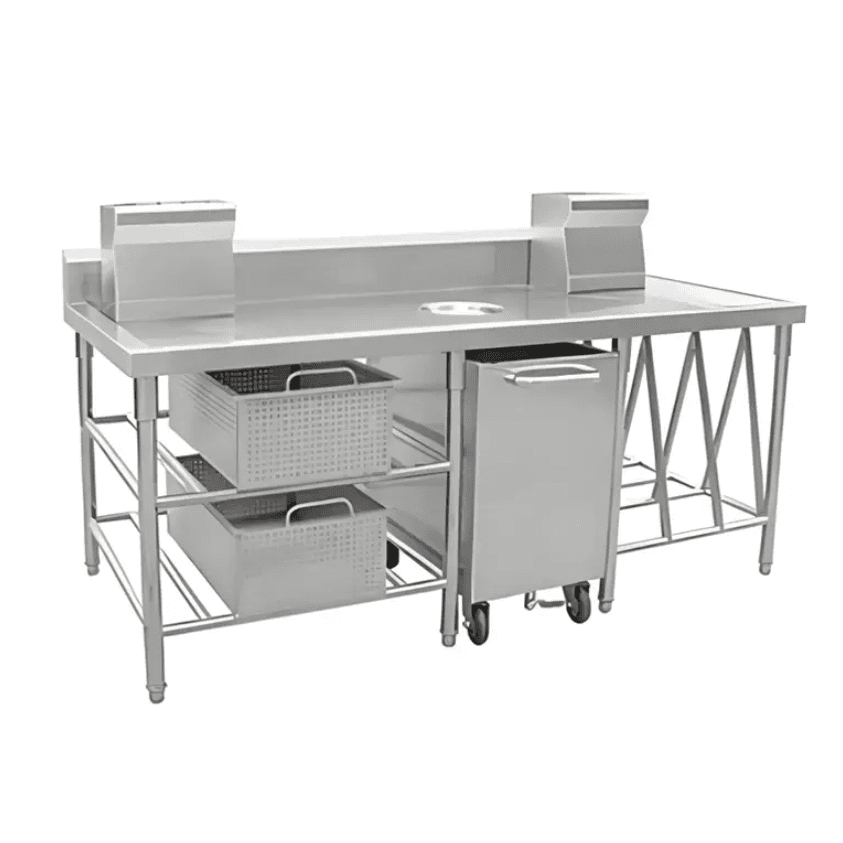
For worktables, the best material depends on where the table will be used. A worktable in a dry preparation area may use 201 stainless steel for cost control. A worktable near washing, seafood processing, or high-humidity areas should be considered for 304 stainless steel.
Prep tables are often used for direct food preparation, so 304 stainless steel is commonly preferred for better hygiene perception and corrosion resistance. If the end users are hotels, hospitals, schools, or central kitchens, 304 can be easier to justify.
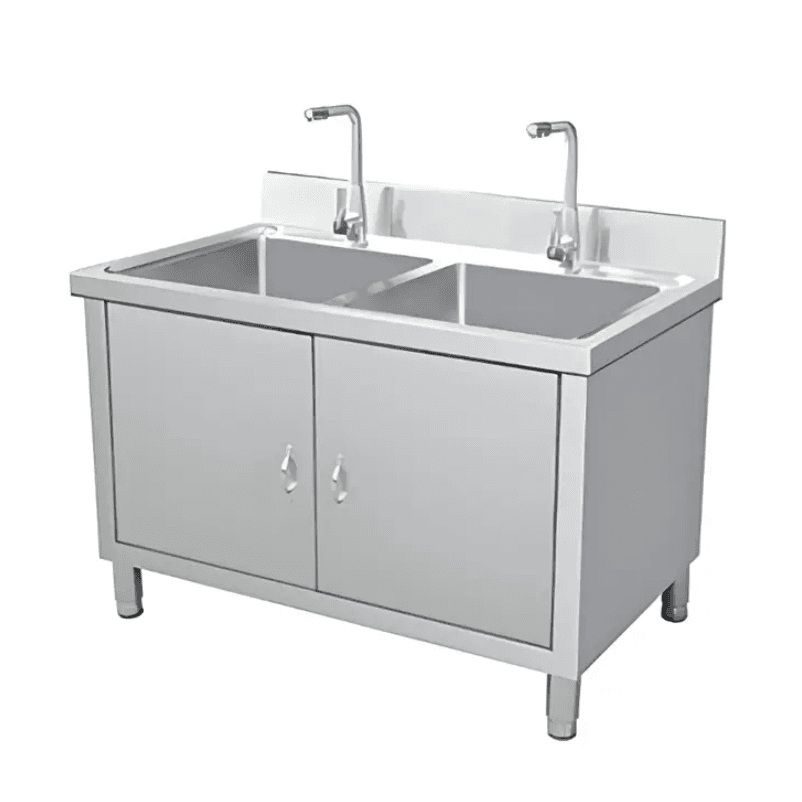
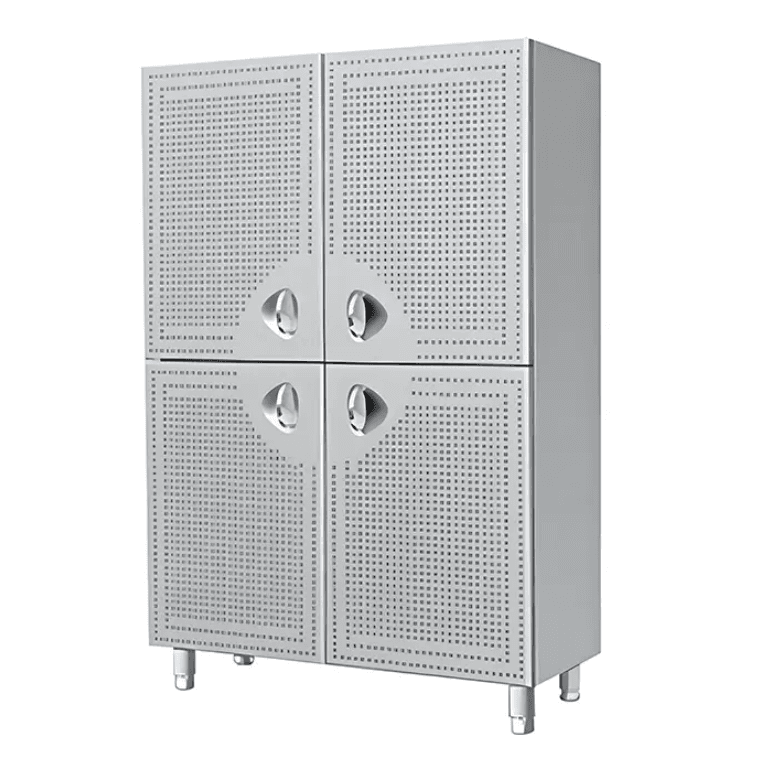
Sinks are exposed to water and detergent every day. For commercial sink products, 304 stainless steel is often the better recommendation, especially for restaurants, hotels, and canteens. Shelves and cabinets should be selected according to placement and cleaning pressure.
How to Avoid Misunderstanding in Quotations
Material misunderstanding is one of the most common sourcing problems in stainless steel kitchen equipment. To avoid this, buyers should request clear written specifications.
For mixed-material products, ask the supplier to state which parts are 304 and which parts are 201 if applicable. For example, a product may use one grade for the top and another for supporting parts. This should not be hidden.
- Material grade
- Thickness
- Product size
- Surface finish
- Structure details
- Accessories
- Packing method
- Quantity and loading information
Factory Testing and Inspection Suggestions
Before shipment, buyers can request factory inspection photos or videos. For large orders, a third-party inspection can also be considered.
Inspection points include product dimensions, surface condition, welding quality, edge polishing, material marking or documentation where available, structure stability, accessories, carton marks, and packaging condition. For distributor orders, keeping inspection records helps with internal quality control and future reorders.
Not Sure Whether 304 or 201 Is Better?
Send your product category, application, and target price range. ValueSteel can help recommend a practical material option for your market.
FAQ
Is 304 stainless steel always better than 201?
304 stainless steel generally offers stronger corrosion resistance, but it is not always necessary for every application. 201 may be suitable for dry or cost-sensitive products.
Which material is better for commercial sinks?
For commercial sinks, 304 stainless steel is commonly recommended because sinks are exposed to water, detergent, and frequent cleaning.
Can I order both 201 and 304 stainless steel products?
Yes. Many B2B buyers order different material grades for different product lines, serving both economy and premium market segments.
How should I compare quotations from different suppliers?
Compare material grade, thickness, size, structure, accessories, surface finish, packaging, and shipment terms. Do not compare only the final unit price.
Conclusion
The choice between 304 and 201 stainless steel kitchen equipment should be based on application, environment, budget, and customer expectations. 304 is usually better for wet, demanding, or premium commercial kitchen environments. 201 can be useful for dry, cost-sensitive, or entry-level product lines.
For B2B buyers, the most important step is to define the product use clearly and request transparent specifications before confirming an order.
Need Help Selecting Stainless Steel Material?
Contact ValueSteel Kitchen with your product list, market, and quantity. We can prepare a quotation based on your required grade, structure, and packaging needs.