
Before ordering a commercial stainless steel sink, confirm the application, bowl quantity, bowl size, drainboard direction, material grade, thickness, faucet hole, drain outlet, base structure, installation conditions, packaging, and shipment inspection requirements.
Introduction
A commercial stainless steel sink is one of the most frequently used pieces of equipment in a foodservice kitchen. It supports washing, cleaning, food preparation, utensil handling, and hygiene control. If the sink is too small, poorly configured, or made from the wrong material, the problem will appear every day during kitchen operation.
For importers, distributors, and hotel restaurant supply companies, sink procurement is more complex than choosing a product photo from a catalogue. Buyers must confirm bowl size, drainboard direction, material grade, thickness, faucet arrangement, cabinet or open base, packing method, and installation environment.
This guide explains what B2B buyers should check before ordering stainless steel sinks for restaurants, hotels, canteens, schools, hospitals, and central kitchens.
Define the Sink Application First
The right sink depends on how it will be used. A handwashing sink, utility sink, vegetable washing sink, and dishwashing sink should not be selected with the same logic.
Before asking for a quotation, buyers should define whether the sink is used for light washing, heavy daily cleaning, wet preparation, or project installation. This helps the supplier recommend bowl number, bowl size, drainboard design, and material grade.
- Dishwashing and utensil cleaning
- Vegetable and food preparation
- Handwashing stations
- Utility and mop washing areas
- Hotel kitchen washing lines
- Canteen and institutional kitchens
Choose the Right Bowl Configuration
Commercial stainless steel sinks may be supplied with single, double, or triple bowls depending on workflow and hygiene requirements.
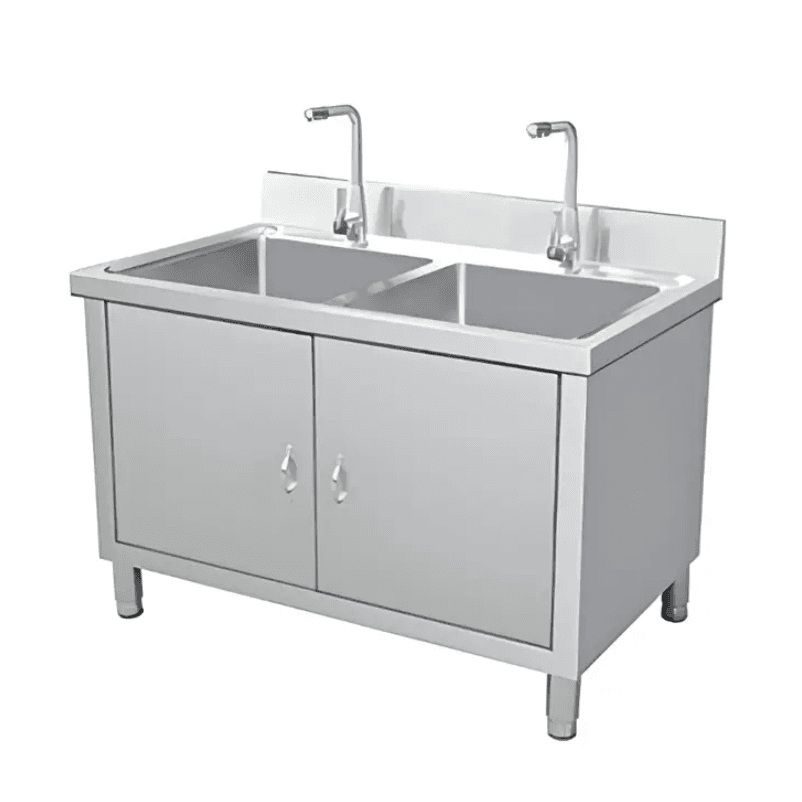
A single bowl sink is suitable for compact kitchens, utility areas, and simple washing needs. A double bowl sink is one of the most common options for restaurants and medium-size kitchens. A three bowl sink is often used where washing, rinsing, and sanitizing need to be separated.
For project buyers, bowl quantity should match the actual kitchen workflow. For distributors, it is useful to keep common single and double bowl models while offering custom bowl arrangements for project orders.
Bowl Size and Drainboard Direction
Bowl size affects daily usability. A bowl that is too small may not hold trays, pots, or large utensils. A bowl that is too deep may be uncomfortable for some operators if the overall height is not well matched.
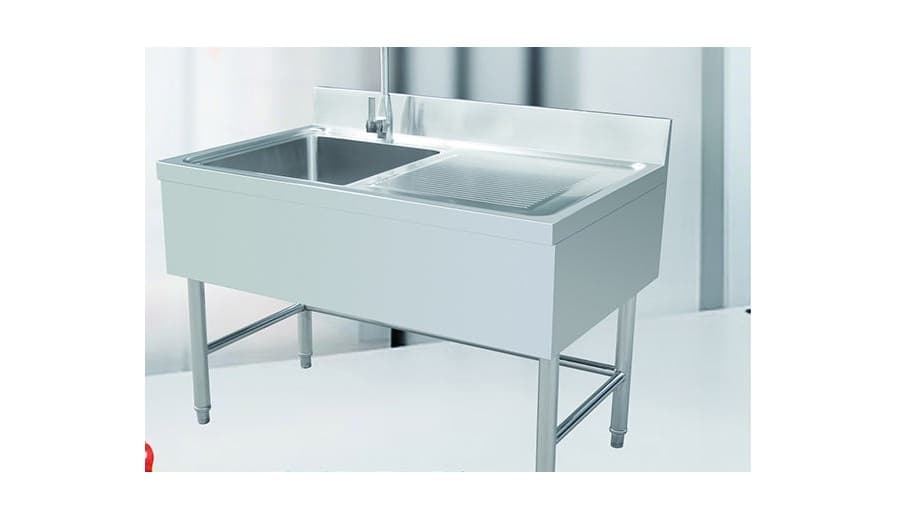
Drainboards are a frequent source of ordering mistakes. Buyers should clearly confirm whether the drainboard is on the left, right, or both sides. The correct direction depends on kitchen workflow and installation position.
A clear inquiry might say: double bowl sink, right drainboard, 1200 mm total length, for restaurant dishwashing area. This reduces quotation mistakes and production changes.
- Size of pots, pans, and trays
- Washing volume
- Kitchen space
- Operator comfort
- Drainage position
- Faucet reach
Material Grade for Commercial Sinks
Because sinks are exposed to water, detergent, and frequent cleaning, 304 stainless steel is commonly recommended for commercial sink products. It offers stronger corrosion resistance than 201 stainless steel and is usually better suited for wet environments.
201 stainless steel may be considered for cost-sensitive markets, but buyers should understand the application conditions and customer expectations. If the sink is used in a humid or demanding environment, 304 is generally the safer recommendation.
- Stainless steel grade
- Thickness
- Bowl material and frame material
- Surface finish
- Welding and polishing quality
- Whether accessories are included
Open Base, Cabinet Base, or Wall-Mounted Design
An open base sink is easy to clean around and suitable for many restaurant and canteen applications. It is often simpler and cost-effective.
A cabinet base sink provides enclosed storage and a cleaner visual appearance. It may be suitable for hotels, front-of-house support areas, or projects that require storage under the sink.
Wall-mounted sinks are useful for handwashing stations and compact spaces. Installation preparation is important because the wall must support the structure properly.
Faucet, Drain, and Installation Preparation
Sink procurement should not stop at the stainless steel body. Accessories can affect installation and user experience. If buyers source faucets locally, the sink should be prepared with compatible hole positions.
Installation issues often come from missing information before production. A sink may be well made but still difficult to install if drainage, wall clearance, or faucet position does not match the site.
For project buyers, a simple drawing is strongly recommended. For distributors, keep a specification sheet that clearly shows bowl size and drainboard direction.
- Total length, width, and height
- Bowl length, width, and depth
- Drain outlet position
- Backsplash height
- Wall clearance
- Whether the sink ships assembled or semi-assembled
Shipment Inspection for Sink Orders
Sinks can be damaged during transportation if packaging is weak. Corners, bowl edges, drainboard surfaces, and legs should be protected.
Before shipment, inspection should check product dimensions, bowl shape and welding, surface scratches or dents, drain hole position, drainboard direction, leg stability, accessories, packaging protection, carton marks, and product labels.
For export orders, shipment inspection photos are useful for both supplier and buyer records. They also help the buyer confirm that the product matches the purchase order before container loading.
Planning a Sink Order?
Send bowl size, drainboard direction, material requirement, quantity, and destination country. ValueSteel can help prepare a practical quotation.

FAQ
What stainless steel grade is best for commercial sinks?
304 stainless steel is commonly recommended for commercial sinks because sinks are exposed to water, detergent, and frequent cleaning.
How many bowls should a restaurant sink have?
It depends on workflow and local requirements. Single bowl sinks are suitable for compact use, double bowl sinks are common for restaurants, and three bowl sinks may be used where washing, rinsing, and sanitizing are separated.
Should I choose a sink with drainboard?
A drainboard is useful when washed items need space to drain before storage or further handling. Confirm left, right, or double drainboard according to the kitchen layout.
Can commercial stainless steel sinks be customized?
Yes. Bowl size, drainboard direction, material, thickness, base structure, backsplash, faucet hole, and packaging can often be customized.
Conclusion
Choosing a commercial stainless steel sink requires careful attention to application, bowl configuration, material grade, drainboard direction, accessories, and installation preparation. For B2B buyers, clear specifications reduce quotation errors and improve customer satisfaction after delivery.
For restaurants, hotels, canteens, and institutional kitchens, the sink is part of the daily hygiene workflow. A well-selected sink makes cleaning easier, supports better kitchen organization, and reduces installation trouble.
Need Stainless Steel Sinks for Distribution or Project Supply?
Contact ValueSteel Kitchen with your sink size, bowl layout, and target market. We can support standard models and custom sink requirements for overseas buyers.